
Commercial Service
Commercial Grease Trap Pumping & Cleaning in East Texas
A-1 Smith's Septic Service provides professional grease trap pumping and cleaning for restaurants, cafeterias, school kitchens, and commercial food service facilities throughout East Texas. Stay compliant, odor-free, and operational.
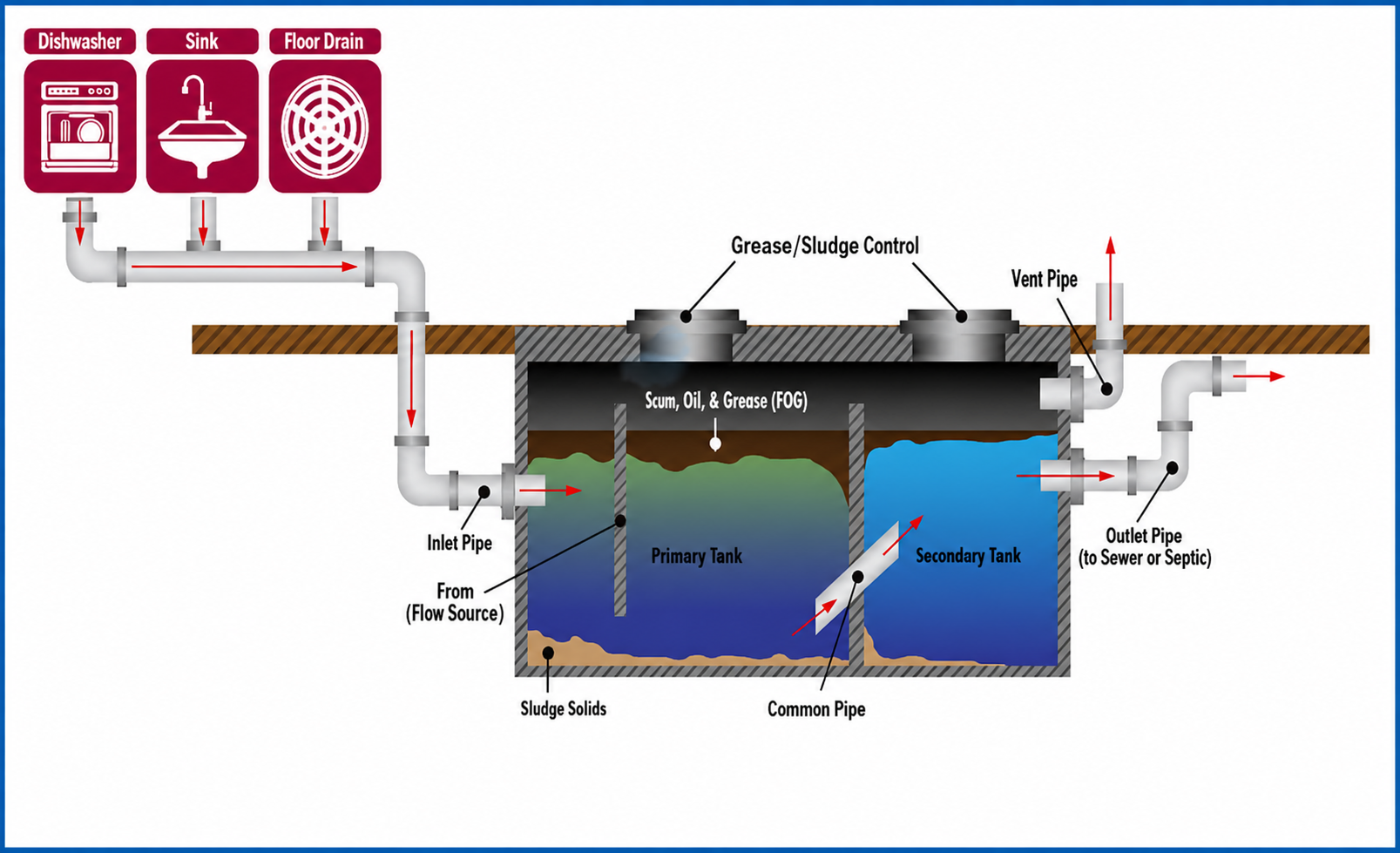
What's Included in Every Grease Trap Service
Every grease trap cleaning from A-1 Smith's goes beyond simply pumping the trap. We clean the interior, inspect key components, and provide documentation that satisfies health department requirements.
Full Trap Pumping
Complete removal of accumulated grease, solids, and wastewater from the trap.
Interior Cleaning
Scrubbing the trap walls and bottom to remove grease buildup that pumping alone does not eliminate.
Baffle Inspection
Visual check of inlet and outlet baffles — damaged baffles allow grease to pass into the sewer line.
Inlet/Outlet Line Check
We inspect connecting lines for grease accumulation that can restrict flow and cause backups.
Health Code Documentation
Written service records including date, waste volume, and trap condition for your compliance file.
Flexible Scheduling
We work around your kitchen hours to minimize disruption to daily operations.
Grease Trap Service for All Commercial Kitchen Types
Any commercial kitchen that prepares food generates grease that must be captured and removed. We service a wide range of East Texas food service operations.
Types of Grease Traps We Service
Whether you have a small under-sink passive trap or a large in-ground interceptor, A-1 Smith's has the equipment and experience to pump and clean it properly.
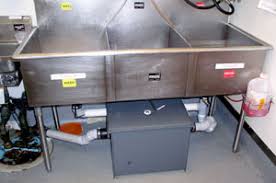
Passive (Under-Sink) Grease Traps
Small-capacity traps installed directly under sinks. Common in smaller kitchens and food trucks. Require frequent cleaning due to limited capacity.
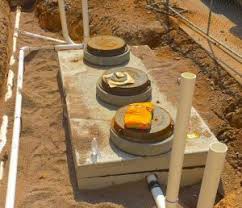
In-Ground Grease Interceptors
Large-capacity interceptors buried outside the building. Used by high-volume restaurants and institutional kitchens. Pumped on a scheduled basis to maintain compliance.
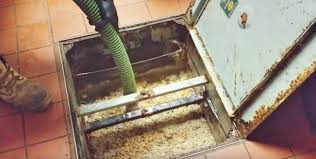
Grease Trap Service — Common Questions
How often should a restaurant grease trap be pumped?
Most local health codes require grease traps to be cleaned when the combined grease and solids layer reaches 25% of the trap's total liquid depth — the "25% rule." In practice, high-volume kitchens may need service monthly, while lower-volume operations may go 60 to 90 days between cleanings.
What happens if a grease trap is not maintained?
Neglected grease traps overflow into the drain system, causing backups, foul odors, health code violations, and costly fines. Grease buildup can also damage pipes and result in mandatory closures during a health inspection.
Do you provide service records for health inspections?
Yes. After every grease trap cleaning we provide written documentation of the service date, the amount of waste removed, and the condition of the trap. This documentation satisfies most municipal and county health department requirements.
Can you schedule after-hours or weekend service?
We offer flexible scheduling to minimize disruption to your kitchen operations. Contact us to discuss a service window that works for your business.
Schedule Grease Trap Service for Your East Texas Business
Call A-1 Smith's Septic Service at 936-291-3526. We'll set up a maintenance schedule that keeps you compliant and your kitchen running clean.
Call 936-291-3526